As we head into summer and start thinking about getting outside and photographing beautiful landscapes —and maybe even enrolling in Landscape Photography — it's worth considering the placement of your horizon line. It's an important compositional element of landscape images. That place where land meets sky usually draws the eye of the viewer. It's a bold slash from right to left, and we already know that horizontal lines in images pull the eye in along with them. Often, depending on what you're photographing, it's also an area of high contrast -- think a light sky against dark rocks or trees, a snowy field under a threatening gray cloud, or towering white clouds over sunlit fields or a glittering ocean.
Because the horizon line will exert such a strong pull on the viewer of your image, where you place it really matters. And poor placement will feel jarring, even if you can't quite articulate why. In general, I advise placing the horizon line no higher than the center of your image. Even the center can feel too high and make the sky portion of your image feel cramped, so placing that horizon line in the bottom third of your photo will be even better.
Let's look at a few examples:
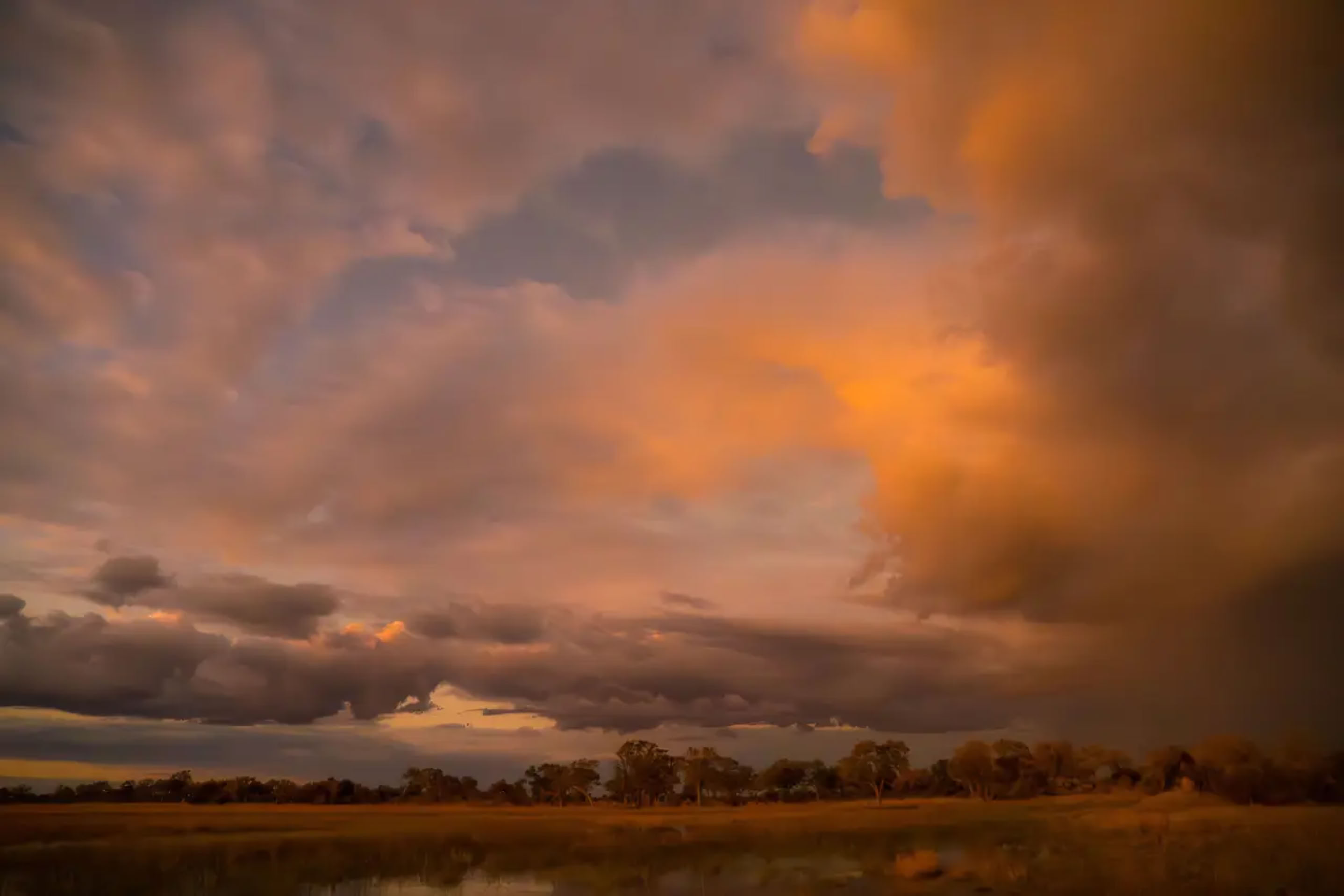
Low Horizon Line
This photo was taken in Africa on the field trip that was a companion to our Wildlife Photography course. The views were breathtaking. What struck me even more than the vast plains and eye-catching trees were the skies. Great, towering clouds could roll across the wide open spaces in a matter of moments, it seemed. Sometimes they were fluffy and white, sometimes a foreboding steel gray, and sometimes, as in this image, they arrived right in time to catch and reflect the beauty of the setting sun. Because the horizon line is so low in this image, the emphasis is very much on the sky -- as it should be. The sky was the star of this show. (Speaking of stars, a sky full of them or a great view of the Milky Way would be another perfect candidate for a very low horizon line.)
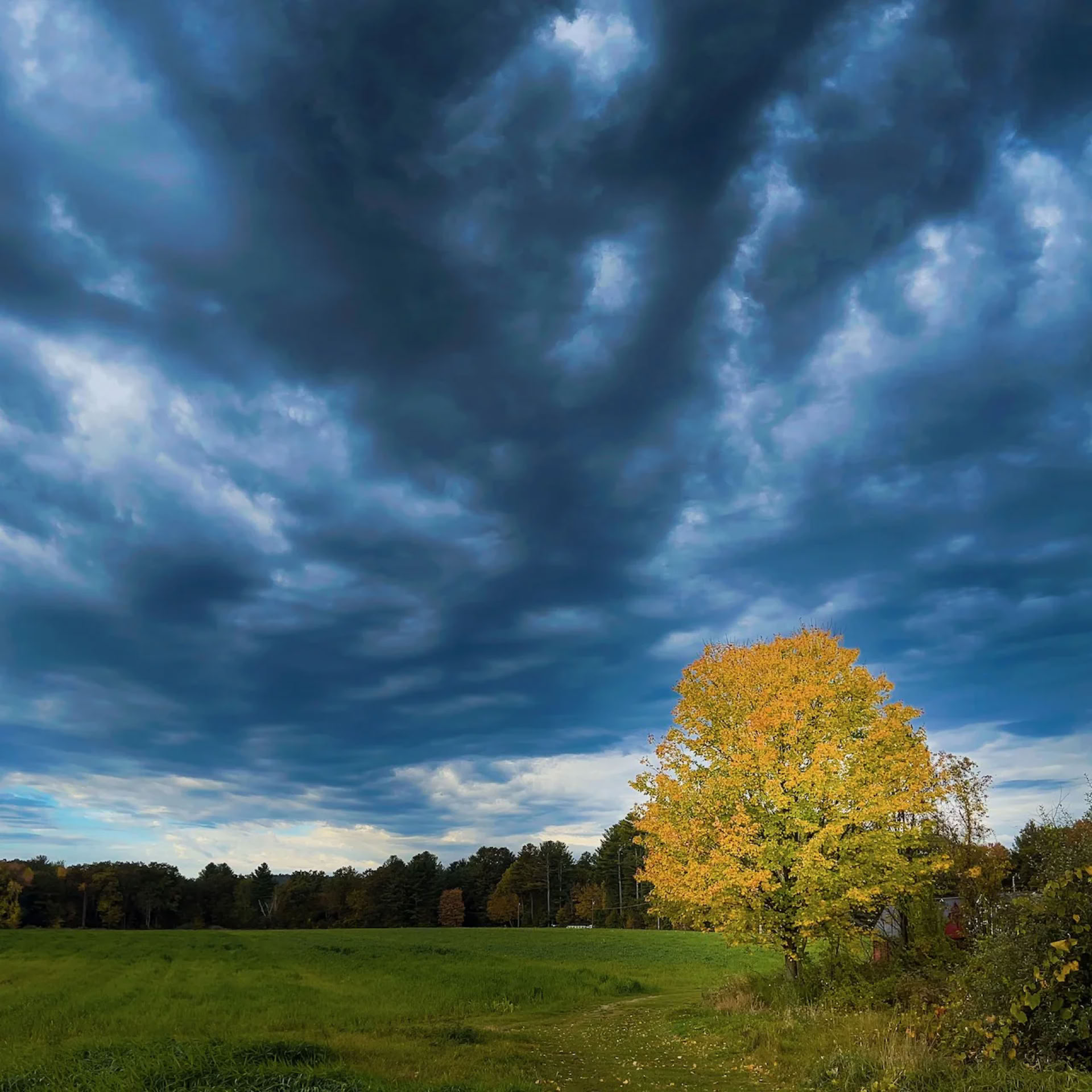
Here is an example from a bit closer to home: a quintessentially New England image of a tree showing off its fall colors under a sky that seems to be threatening to rain or blow any moment.
While I would say that the tree is the subject of the photo — if landscape photos can be said to have a subject — it's the sky that turns this from a picture of a tree into a story of the beauty and tumult of the changing seasons.
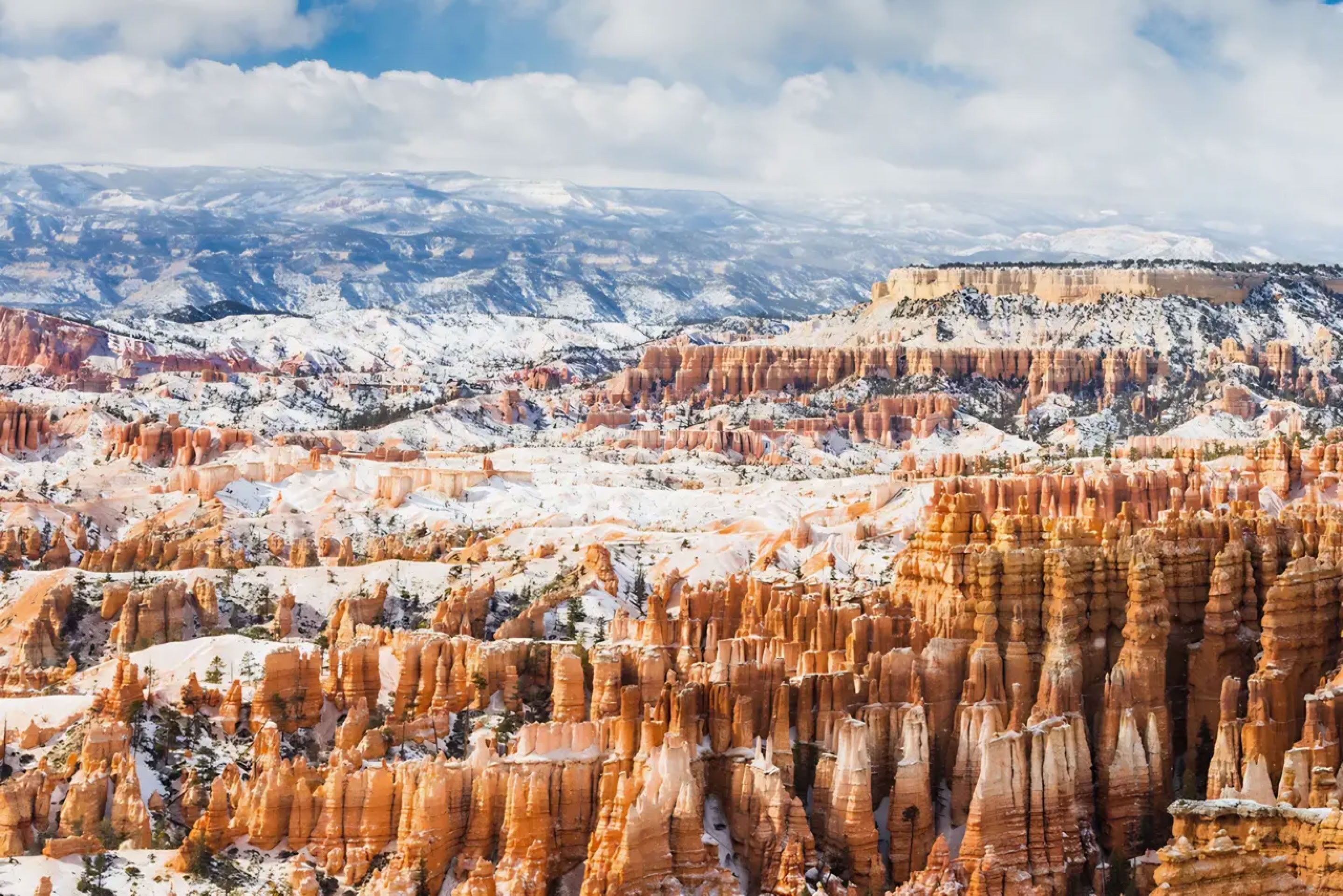
High Horizon Line
Maybe you've already intuited what I'm about to say, but I'll say it anyway. When you give the sky a lot of space by lowering the horizon line, it puts more emphasis on the sky. Conversely, if you want to place heavier emphasis on the foreground, you can do that by raising the horizon line.
This is not something I do often. I still stand by my statement that a lower horizon line is better ... but ... when the foreground looks like this, a high horizon line makes sense.
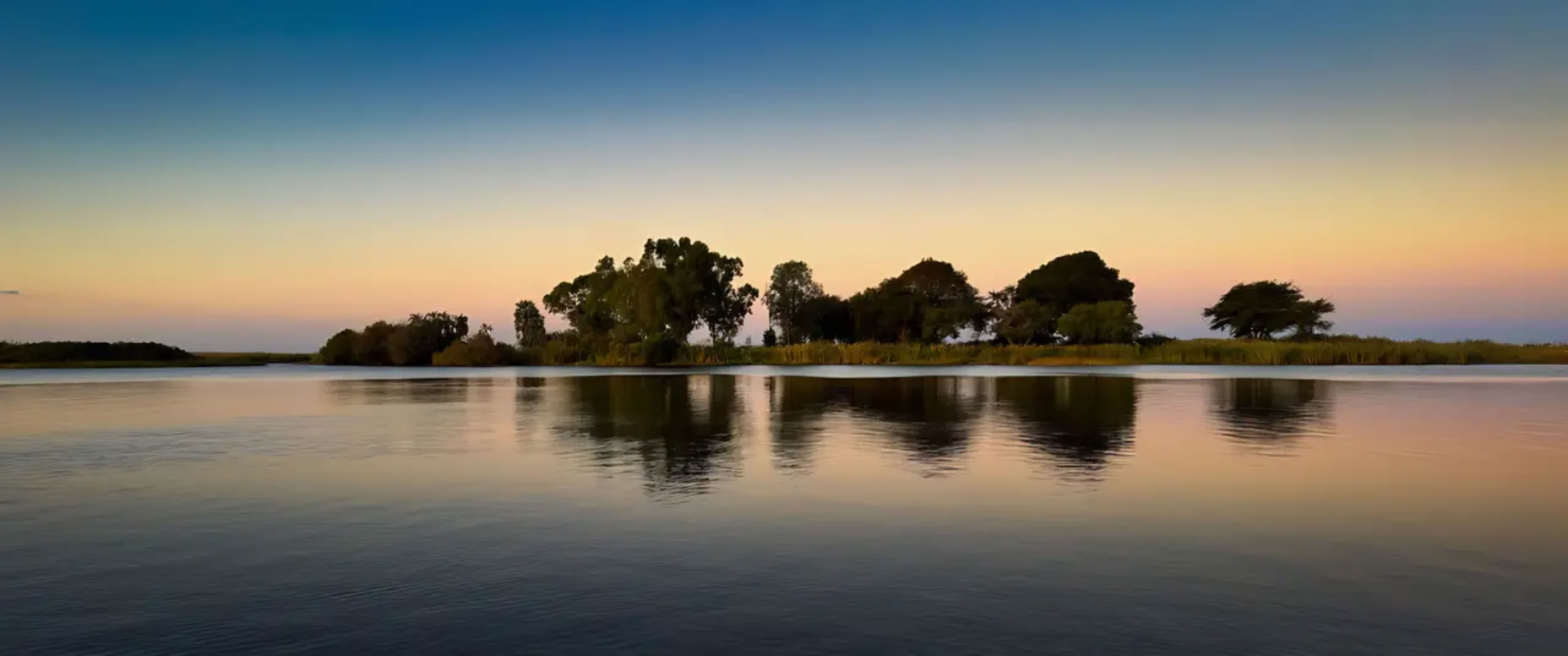
Centered Horizon Line
As with nearly every rule of composition, there comes a time to break it -- once you understand it well and are breaking it purposely as an artistic choice. This is as true about horizon line placement as it is about any other compositional principle. Ordinarily, I would strongly advise against a centered horizon line. When you leave your viewer's eye no guidance as to whether it's the sky or the foreground that deserves emphasis, even a beautiful landscape can feel flat and bland. There's no story and, therefore, less to engage the viewer's appreciation. However, if you have the opportunity to catch some element of the landscape reflected in a body of water (the stiller and more mirror-like the better), a centered horizon line could be an ideal choice. In that case, you're emphasizing the balance and the symmetry of the scene, and that effect is enhanced by the horizon line cutting the image into two mirrored halves.
If you found this interesting and want to learn more about photographic composition and how to use it skillfully to craft images that tell a story and draw your viewer in, you'll find that and more in our Photography 2 course. And for all the hands-on photo ops you could ask for, you could become a Photo Explorers member. Photo Explorers travel the land together, seeking out beautiful places and new horizons to photograph. The more you practice making decisions about photo composition while you're out shooting the better and more sure-footed you'll get.