It's safe to say that photographers spend a good deal of time and effort on achieving sharp focus, taking care to dial in precisely so that details are clear and crisp. This is a good thing. In fact, it's tempting to say that getting good focus is the most important thing, and in some ways, that's true. It's also worth considering, though, that the out-of-focus areas of an photo play a big role in how eye-catching an image is and in the feeling it evokes in the viewer.
There's no denying the beauty of a portrait where the subject pops against a soft, dreamy background or the pull of a captivating macro photo where the background becomes a wash of color, allowing the tiniest details of the photo's subject to shine. You may not realize it, but in both those cases what you might have been appreciating was bokeh.
Bokeh is a Japanese word that literally translates to "blur" or "haze." When we use the term in photography, however, we're not really talking about the blur itself but about the feeling that the blur creates -- the aesthetic quality of the blur. Confused? I know. Let me see if I can make things clearer by telling you how I talk about bokeh with my students to help keep it distinct from other artistic aspects of photography.
Right from the start, "bokeh" presents confusion; you might find that photographers can't even quite agree on how to pronounce it. But whether you say "boke-ah" or "boke-ay," You're talking about the same thing. Or are you? In the wider photography world, I've sometimes heard it said that bokeh exists in any out-of-focus area of an image. That may well be, but in the photography community at C1M, we use the term a bit differently from that. For the sake of clear communication, I teach my students to think of things this way: blur is related to motion and occurs when you have a moving subject and a shutter speed that is not fast enough to capture that motion. Fuzziness is related to depth of field - that is, the aperture setting, which determines how far in front of and behind your subject you'll have sharp focus. And when we talk about bokeh, we're talking about the balls of light that appear when a highlight in the background of an image is out of focus. These can produce a beautiful effect in an image.
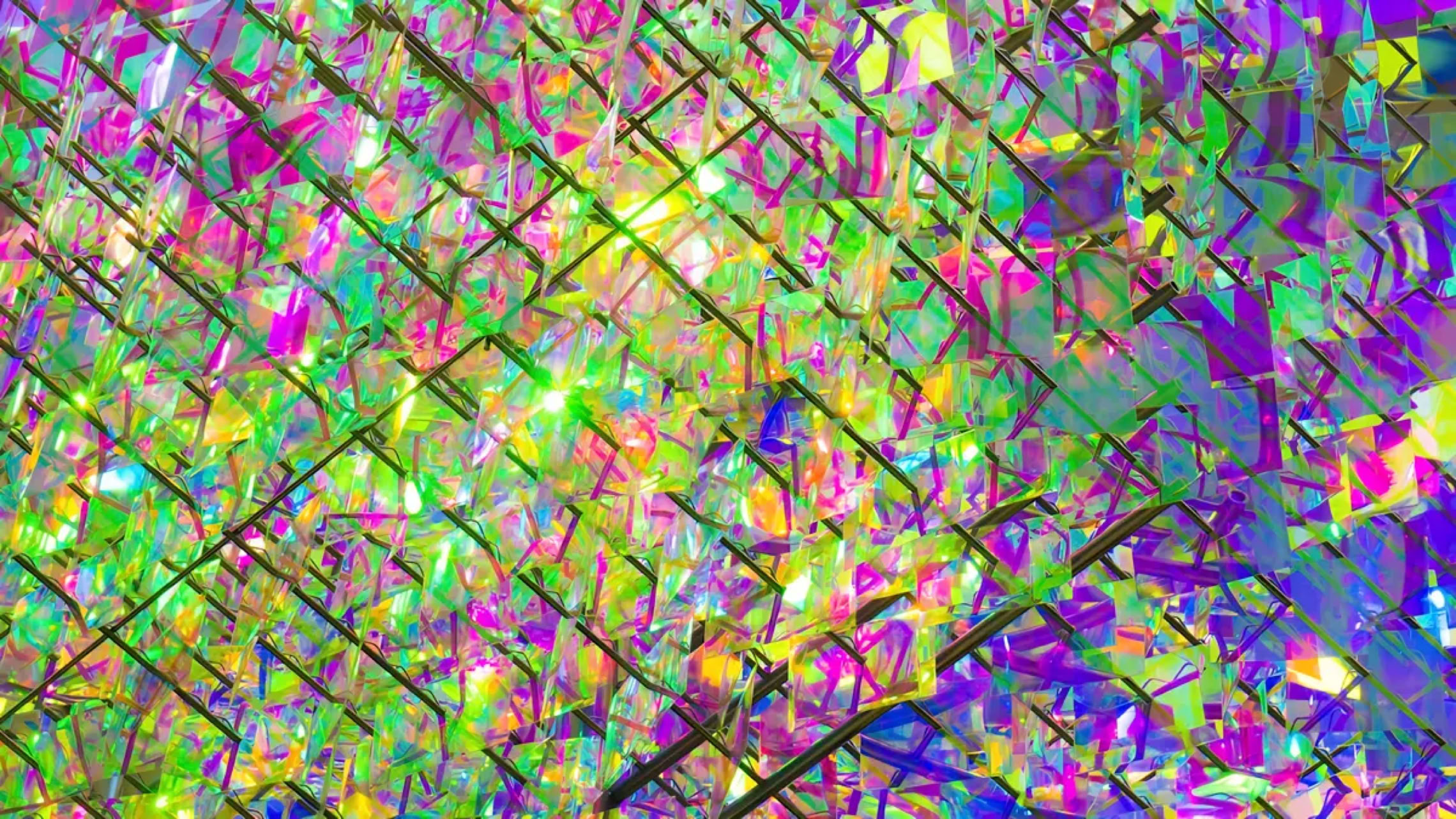
As with many aesthetic concepts, bokeh can be subtle and hard to identify at first, so let's start by looking at a dramatic example, so you can really see what I'm talking about. On one of our Photo Explorers photo safaris, we found a stunning installation of kinetic art. You can see below the way these colorful pieces caught the light, and if you use your imagination, you can perhaps picture how they might shift with the breeze and sparkle in the sun.
I used my imagination and thought that with all that color and all those highlights, it might be a great opportunity to create some spectacular bokeh, and I was right. To get the shot, I focused on something close to me -- in this case, the toe of my shoe -- then, while holding the shutter release button down halfway to lock my focus at that distance, I framed a shot of the kinetic sculpture and pressed the shutter release button the rest of the way down to capture the image. And just look at all those soft, round highlights!
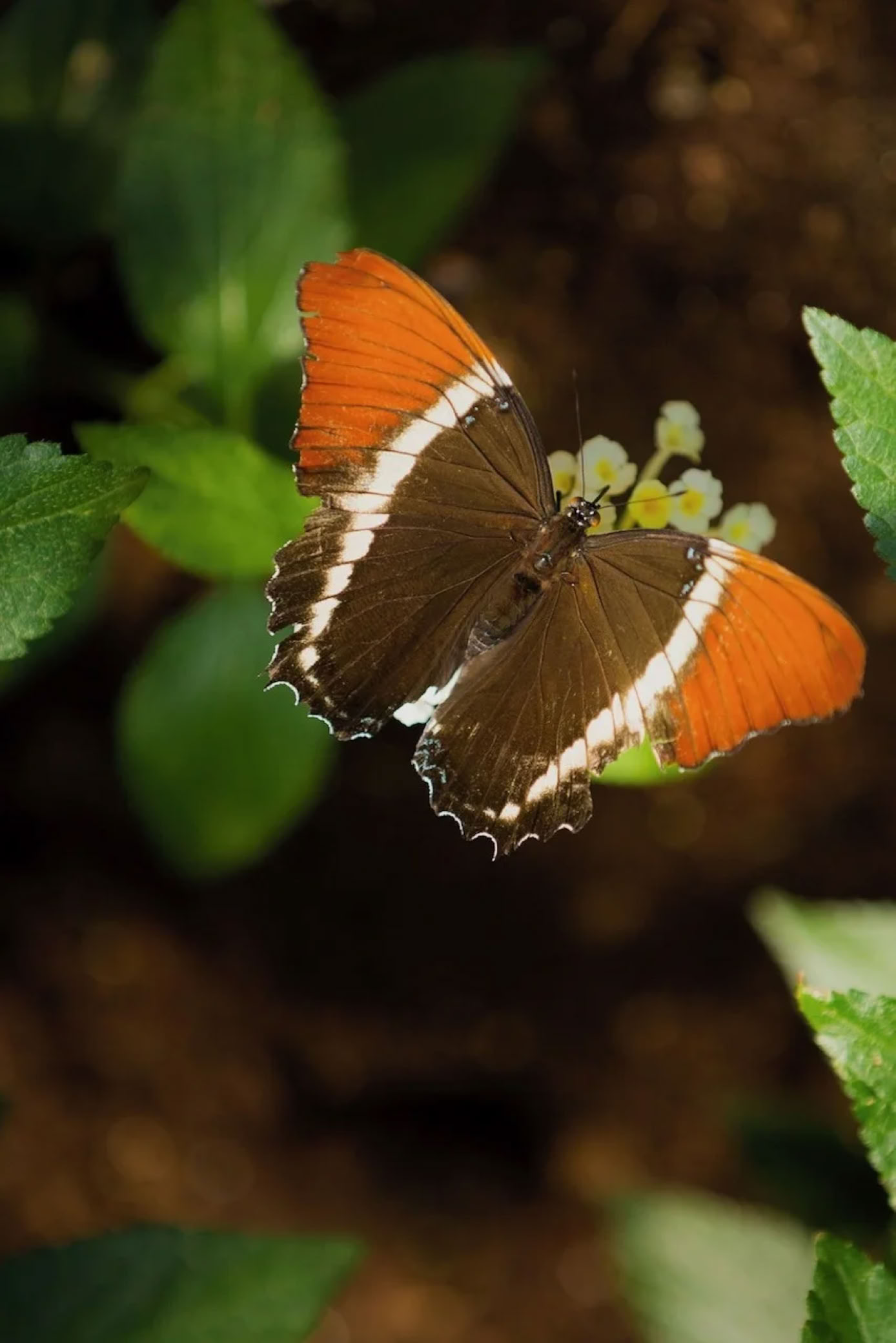
For a slightly more subtle variation of bokeh, take a look at this beautiful butterfly. It was perched on a flower having a drink, and I was shooting down on it. I was fairly close to it, so the distance from the lens to the subject was probably less than the distance from it to the background. (Moving your subject farther away from your background is one tip that can help you achieve beautiful bokeh, by the way.)
If you look in the upper right and lower left corners of the image, you'll see that the highlights — light reflecting off shiny bits of mulch, in this case — have transformed into soft, out-of-focus bokeh balls, adding some beauty and interest to the background of the image without distracting from the intricate details of our fluttering friend. It lends a bit of sparkle and magic to the image and enhances the feeling of woodland whimsy we may feel watching butterflies flitting about.
I encourage you to play with this concept and see what kind of bokeh you can capture the next time you're out shooting. Keep in mind that bokeh is greatly influenced by how your lens handles spherical aberration and by how many blades your aperture has. A wide-open aperture will be likely to produce rounded bokeh highlights. As you make the aperture smaller, the edges of the blades may create a less round opening, which will in turn create bokeh highlights that are not perfectly round. Which brings me to another cool thing about bokeh. The shape of your bokeh highlights will be determined, as I just said by the shape of your aperture. That means that if you shoot through a shaped mask, your bokeh highlights could be hearts ... or stars ... or anything else you can dream up and cut into a mask.
It's the freedom we have as artists that really makes photography so special. If you'd like to learn more about the artistic aspects of photography and how to use artistic principles to create stunning images, we cover all that and more in our Photography 2 class. And if you're just getting started with your digital camera and could use some guidance about how to manage your shutter speed, your aperture, and the other settings needed for a properly exposed image, join us for Photography 1.